Friday, May 17, 2019

A step too far
When they came for Kate Smith, there was no one left to answer for her. 
Well, not exactly. There was a niece who said Aunt Kathryn didn’t have a prejudiced bone in her body. 
Based on an anonymous tip, the Yankees and the Philadelphia Flyers banned Kate Smith’s recording of “God Bless America” after two songs she recorded in the Thirties that reference “darkies’ and “pickaninnies” were uncovered.
The Yankees, a team that dragged its feet when it came to integrating their roster (it didn’t happen until 1955, eight years after Jackie Robinson) had taken to playing Smith’s recording during the seventh inning stretch as a jingoistic rejoinder to 9/11.
The Flyers’ connection went deeper. The team believed playing her recording before key games was good luck. When the Flyers made their Stanley Cup runs 40 years ago, they brought Smith to the Spectrum to sing it live. After many years of watching her star fade, it must have felt like personal redemption to put on a glittery gown, follow the red carpet out to mid-ice and belt out God Bless America. Relevant again. The Flyers erected a statue of Smith outside the arena to show their gratitude. When they banned the song, they took the statue down. 
It’s more sad than anything, a knee-jerk cynical reaction made by marketing executives who fear perception is reality and the possibility of losing a ticket sale or two (and I don’t think I’m exaggerating about how many people might stay away if the teams continued to play the recording). 
But what happens in 80 years when someone blows the dust off Randy Newman’s “Rednecks”? With no understanding of context or point-of-view, but only hearing the n-word dropped countless times, do they push the Motion Picture Academy to take away his Best Song Oscar?
Or Bing Crosby’s blackface number in Holiday Inn. Does his “White Christmas” start falling off  of holiday playlists?
A wild-eyed Ralph Kramden threatening to send Alice “to the moon”? Maybe one day gone forever to the same purgatory where Amos and Andy, Vaughan Meader and Foster Brooks’ “drunk guy” were recently joined by Kate Smith.  


White Heat
White Heat lives up to its reputation as possibly the best gangster movie Hollywood made. Aside from its “Made it Ma, top of the world!” fireball ending, there’s James Cagney as Cody Jarrett, an unhinged killer with Oedipal urges strong enough that his mother is a member of his gang (TCM showed the movie on Mother’s Day).  
Cody Jarrett makes people uncomfortable. His gang members, fellow inmates, girlfriend (everybody but Ma) are clearly on edge when Jarrett is around. He has a temper that flares up quickly and without warning. He kills without hesitation. Jarrett talks to his Ma after she’s dead (another gang member, sick of her domineering, shoots her in the back while Cody is jail). He doubts his own sanity as he dwells on his father, who died “in the nuthouse.”
By the time he reaches the end of the line, cackling while the flames from a burning chemical tank explode around him, Jarrett has pretty much lost it.
Cagney’s Jarret reminds me of Heath Ledger as the Joker. While the Joker is on a whole other plane of unreality, they are both unrepentant killers, unpredictable and just scary to be around. Cody, when he starts to get angry, shows a weird, lipless sneer reminiscent of the Joker’s own mutilated mouth.
One other thing that sets White Heat apart is its presentation of what may be a reasonably realistic portrayal of what it’s like to live outside the law. I’ve read a couple of novels in the Parker series by Richard Stark. Parker (he doesn’t seem to have a first name) supports his modest lifestyle by committing major heists. When his share of the take starts to dwindle past a certain point, he begins looking for his next payday.  
Just a few pages of the Parker books are about the actual crime. Mostly, they cover the planning and strategizing of the heist, and its aftermath, hiding out, sometimes for weeks, in shabby motels and abandoned houses.
White Heat similarly doesn’t romanticize outlaws. After Jarrett’s gang hijacks a “treasury train,” they hide out in a vacant house, wearing overcoats indoors (Cody won’t allow them to turn up the heat, lest the outside world notices smoke rising from the chimney), before moving on to cheap roadside bungalows. No penthouse apartments. No fur coats.
The other Parker touch in White Heat is the character called “The Trader,” a guy who stays mostly underground and serves as Cody’s financier/“business development” agent. The Trader meets Cody in yet another abandoned house (this time out in the country) to present him with the plans and financing to pull off a payroll robbery at a chemical plant. In the Parker books, there’s usually someone who recruits the gang, then lays out the money for guns, ammo and vehicles in return for a (usually major) cut of the take.

Hollywood gangster movies had pretty much run their course when White Heat came out in 1949. This late, last gasp left the genre on top of the world.

Friday, March 15, 2019


The beat goes on

One of the elements that propelled Simon & Garfunkel’s records, especially in their later years, was the percussion that gave punch and punctuation to Paul Simon’s sometimes bookish lyrics.

There was the groovy go-go beat on Hazy Shade of Winter, a song that referenced “manuscripts of unpublished rhyme” that you could dance to. The rolling thunder in America. The freak-out percussion at the end of Fakin’ It. The drum rolls that clear the way for the chorus in The Only Living Boy In New York. The cannon shots in The Boxer, like knockout blows. And in Bridge Over Troubled Water, the crescendo of cymbals and drums that give way to that faraway, submerged beat that starts with the “sail on, silver girl” lyric.

All of it was the work of session drummer Hal Blaine, who died this week. It’s not a reach to say Blaine sits at one of the four spots on the mythical Mount Rushmore of rock musicians. He played on more than 150 songs that reached the top ten. His log of session work makes for a playlist long enough for a car trip from New Jersey to Maine. Good Vibrations. These Boots Are Made for Walkin’. The drumroll that kicks in just before the chorus sings “Batman” on TV. The blues rock beat on Sinatra’s That’s Life. California Girls. Mr. Tambourine Man. Eve of Destruction.

Dennis Wilson became the Beach Boys’ drummer because he was Brian’s kid brother. Mike Clark had a cool haircut and that landed him the drumming gig with the Byrds. Live, their inability to keep time didn’t matter – they could barely be heard over the screams. For recording, Hal Blaine got the call.

Blaine is responsible for the boom-ba-boom bang, boom-ba-boom bang that kicks off Be My Baby, maybe rock’s most iconic drumbeat. He found the Bridge Over Troubled Water drum sound by placing tire chains over the snare drum and hitting them. On A Taste of Honey, he contributed the boom-boom-boom-boom bass drum bridge. (And probably deserved a co-author credit).

Blaine played on MacArthur Park. I Got You Babe. Wichita Lineman. Nearly all of Phil Spector’s hits. Close to You. Let’s Live For Today. Wouldn’t It Be Nice. Windy. It’s Over. Monday, Monday. Up, Up And Away. It’s a jukebox for all eternity.


Thursday, March 14, 2019


So long, OBJ

When JFK died, there was a list that got passed around offering comparisons between the deaths of Kennedy and Lincoln – their last names were both seven letters long, Lee Harvey Oswald and John Wilkes Booth’s names had 15 letters, Booth shot Lincoln in a theatre, then fled to a warehouse; Oswald shot Kennedy from a warehouse and fled to a theatre. It was a long list; I can only remember some of it.

As a kid, reading the list brought some sense to a senseless act, put it into a kind of historical context and made me feel like maybe Kennedy’s death was, in some way, fated.

Forty-nine years ago, the Giants traded a record-breaking wide receiver, known for his blazing speed and swagger, to the Cleveland Browns for three players. And today, in trying to make sense of the Odell Beckham trade, I’m relating back to its similarities to the Giants dealing Homer Jones to Cleveland in 1970.

It killed me to see Homer leave New York, but even as a dopey teenager I realized its inevitability. The Giants needed a lot of help and trading their best player, and getting three players in return, was a quick way to start stocking the shelves. It didn’t hurt that one of the guys we got from Cleveland was Ron Johnson, whose star would quickly eclipse that of Jones.

The Giants of 2019 are now officially in full tear-down mode. They received two high draft picks and a promising player in return for Beckham (see, like the Jones trade, three players for one) so there’s a start. I hope like hell the Giants’ front office has a plan.

There were times when you were just dazzled by Beckham’s speed, his moves, his hands. And there were times when he could be a total embarrassment, like choosing the weekend when players were protesting police violence to mime peeing like a dog in the end zone after a touchdown.

Sometimes historical events repeat themselves, and sometimes their outcomes do as well. And for the record, there are 12 letters in Odell Beckham’s name and ten for Homer Jones.


Friday, December 21, 2018


Make your holiday reservations now!

If you haven’t already booked your plans for New Year’s Eve, here are three possible options you may want to consider:

Holiday Inn
Just off the highway in bucolic, perpetually snowing Midville, CT, this cozy, converted farmhouse offers ample parking, a full course dinner and funny hats for everyone. The local woods are handy when the only bathroom is in use.


The Dolemite Experience
Located on the wrong side of the tracks, with street parking only (customers are encouraged to not leave any valuables in their cars). The décor includes, basically, a lot of tables crammed up against each other. The popular floor show, featuring the club’s namesake, starts promptly at 10 p.m. (and kicks in at around the 30-second mark of the video).


Max O’Hara’s Golden Safari
No waiting for tables here as there is seating for hundreds on the floor or balcony in this room roughly the size of Rhode Island. Ever the showman, impresario O’Hara’s majestic mid-town club offers a jungle motif that includes lions behind a glass wall, full-size trees and vines. The quality of the entertainment can be erratic from night to night, with much improvisation and audience participation.


Friday, December 7, 2018

Eclipsed, overshadowed 

The time between November 22 and December 8 is a light-deprived couple of weeks bookended by dates that still darken many memories – the murders of John Kennedy and John Lennon. It also brings to mind the analogy, Aldous Huxley is to John Kennedy as Darby Crash is to John Lennon.

Huxley died on November 22, 1963, and as his obit was being written it was already shunted to the back pages of newspapers around the world. The author of Brave New World became a footnote and it’s likely more print column inches were devoted to the Dallas police officer Oswald shot and killed that day than to Huxley. As a sub-footnote, Huxley was tripping on his way out, after his wife, at his request, injected him with LSD on his deathbed.

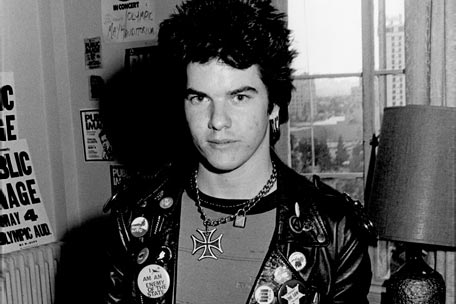
The musical footnote to Lennon’s death was L.A. punk rocker Darby Crash, who picked the night of December 7 to intentionally overdose on heroin. His death wasn’t reported until the next day and then forgotten. On the wall of the room where he died, he supposedly scrawled, “Here lies Darby Crash,” possibly trying to be helpful to whomever would find his body. Nobody added, “And why not?” to the epitaph (Spinal Tap reference).

There are several other instances covering the phenomena of celebrities dying on the same day (or very close). I’m introducing a superficial, simple and subjective scorecard to rank these coincidences in order of magnitude based on a couple of point systems: A score from 1-10 to rank an individual’s lifetime legacy, added to a similar system that guesses at potential achievements (the “what if” factor) had that person lived.

John Kennedy/Aldous Huxley (25 points): JFK gets a 9 for lifetime achievements, docked one point for his
Huxley
incomplete presidency. His what if factor, however, is off the charts with a 10 score. Vietnam. Civil rights. Nixon. World history would have been shaped much differently had he survived. Huxley gets a 4 for writing Brave New World, plus a potential score of 2. Had he lived, he would have become a William Burroughs aging hipster type, his portrait immortalized on head shop posters, followed by an album with Jimi Hendrix playing guitar behind him as Huxley reads from his writings about acid and mind expansion.

John Adams/Thomas Jefferson (20 points): Founding Fathers, the second and third presidents, and possibly the two most famous men of late 18th Century America died within a few hours of each other. They each get a 10 for lifetime achievements, but since they each lived remarkably long lives for the time, Adams dying at age 90 and Jefferson surviving well into his eighties, each receives a zero for what if. The greater, spooky irony is that they died on July 4, 1826, the 50th anniversary of the signing of the Declaration of Independence.

Jimmy Stewart/Robert Mitchum (19 points): Stewart and Mitchum died in 1997 within 24 hours of each other. Stewart gets a lifetime achievement score of 9 (5 Oscar nominations, one win) and the underrated Mitchum an 8. They each receive a 1 what if score as there was always the chance for one final, art-imitates-life role (see the 87-year old Gloria Stuart in Titanic and the dying John Wayne playing a dying gunfighter in The Shootist) that would leave everyone cheering, while wiping away a tear.

John Lennon/Darby Crash (17 points): John gets a 9 for lifetime achievement and a 6 for what if. Chances are he
Crash
would have kept making records that were mostly hit or miss; it’s the other stuff that makes his what if score high (and wistful). We missed the inevitable reunion with Paul (brokered by MTV in a two-hour special edition of Unplugged, then again at the 9/11 tribute concert): the Daily News photo of John, son Sean and Darryl Strawberry at Shea Stadium with the Strawberry Fields Forever headline: trolling Trump on Twitter. I gave Crash a couple of 1 scores. Even by the standards of early punk, his singing and his band the Germs were pretty miserable.

Michael Jackson/Farrah Fawcett (15 points): Jackson gets 8 lifetime achievement points, docked 2 notches for relying on an army of songwriters, producers and arrangers for his solo albums, although he was a marvelous dancer. After he died there was no discovery of a trove of unreleased recordings, just vague talk from insiders about how he was “heading in a new direction.” We’ll give him a charitable 4 what if score. Poor Farrah gets a 2 for Charlie’s Angels and a 1 what if score for a possible role that would have required her to wear glasses or a false nose, allowing Hollywood to hail her bravery.

Friday, November 2, 2018


Lessons from a legend

Our first house was a converted summer bungalow, barely winterized, in a neighborhood that had once been a cheap weekend getaway spot for Newark businessmen and lawyers. In the summer, you could understand why. A decent private swimming pool, with the Rockaway River running beside it. Plenty of foliage. If you needed a dose of civilization, two downtowns, antique Boonton and the more-worldly Denville awaited, a mile’s drive west or east.

Outside of summer, it could be ugly. Unpaved roads, nowhere to push the snow, flooding and the occasional rat. So why would the world’s greatest football writer live there? We guessed, rightly I think, that there was a divorce, and this was where Paul Zimmerman landed.

I saw him at the pool one afternoon and recognized him right away, sitting in a lounge chair, holding court with two of those older Jewish guys who spent their summer by the pool, talking about old baseball players. I hovered nearby to listen, then moved on. The next time I saw him at the pool – if anybody can be said to look like they were reading something intensely, it was him, at that moment. I steered clear, remembering that irritability he sometimes played up in his writing and television appearances. It was part of his appeal, but I didn’t want to test it.

If I had, I might have told him about that earlier time at Giants Stadium when I shadowed him roaming the locker room, buttonholing two rookies, Billy Ard and Byron Hunt, a guard and linebacker. While he made them the focus of his article for Sports Illustrated that week, I came away from watching him with three observations that served me well in corporate communications: acknowledge those toiling behind the scenes, take an unconventional approach to storytelling and be professional, but conversational, when interviewing someone.

He’d eventually remarry and move to Mountain Lakes, a more-fitting landing spot for the world’s greatest football writer. One morning I saw him outside the Denville Smoke Shop, tearing apart the Sunday Times, throwing out the sections that were of no use to him. It seemed symbolic of his writing: no tolerance for bullshit, defined as anything that got in the way of telling the story, whether he was reporting on a game, the draft or a league meeting.

Paul Zimmerman, 1932-2018
Zimmerman was insightful and opinionated, with the kind of cynicism only a seasoned reporter can dredge up. He deciphered plays and game strategies. Discovered underrated players. Each season he wrote a column ranking every NFL announcing team. Today, there are entire websites dedicated to that kind of scrutiny. Once, he vented in an online column about some frustrations he was experiencing with customer service at my old company, Medco Health (I dutifully sent the link to my boss, with a note that more people probably read Zimmerman’s column than anything written about us in the Wall Street Journal).

One Friday in November 2008, he wrote his final column as a series of strokes left him unable to communicate. He couldn’t speak, write or read. Occasionally there was a story about his ongoing therapy or a colleague would write about a visit with him. His spirits were up. He had a great appetite at lunch. Nobody mentioned if he still watched football, or if it even mattered to him anymore. Was he still listening to each announcer and analyst, and somewhere in his head ranking them? We’ll never know.