Friday, September 1, 2017


REVISITING THE MOST INTERESTING MAN IN THE WORLD

There was a time when Stephen Stills could have been king. He was the de facto leader of the Buffalo Springfield, a band that may not have sold a lot of records but, for all the right reasons, was considered by many the American Beatles.


After he folded the Springfield, Stills was chosen by Al Kooper to play on the Super Session album, his name on the marquee as large as that of Kooper and Mike Bloomfield. His genius was all over the first CSN album, writing or co-writing five songs, singing, playing lead guitar, bass and keyboards, and producing. As CSNY, they cut a second album with Stills contributing “Carry On” and “4+20.” CSNY played Woodstock and had the sense to get out of Altamount before the sun went down.

The crown was his for the taking. Then Stills started making solo records and some cracks began to show.

The songs on his first record seemed overshadowed by the list of pals who dropped by to play (Hendrix, Clapton, Ringo – referred to in the liner notes as “Richie”). Stills cut one song drunk and credited Jose Cuervo Tequila for the performance. He wasted his solo spot on Four Way Street with a dumb, piano-pounding rant, pretentiously titled “America’s Children.” His second solo album offered a few choice moments (“Change Partners,” “Marianne”) but you got the impression he was spending more time going over the contact sheets for his album cover shoots than writing better songs. (Stills’ album artwork generally portrayed him as the most interesting man in the world, riding horses, climbing mountains and gazing handsomely out a jet window).

Stills formed a new band called Manassas, with a double album that sounded like Buffalo Springfield 2.0 and it was easy to conclude that maybe being a member of a band was better for him than working solo. But by the CSNY reunion tour in 1974, his contributions almost seemed like an afterthought, marginalized by brighter, smarter work from his band mates. In 1976, he and Neil Young toured together, with promises of the old gun-slinging guitar battles of the Springfield; midway through the tour, Young quit, leaving Stills to ride it out alone.

His hubris drained, Stills began to seem more like a victim. He made a point of covering Young songs on many of his subsequent records, a decision that was always a head-scratcher. While Paul McCartney has spent the past decades explaining how he and John Lennon were creative and visionary equals, Stills spent nearly the same amount of time reminding us he couldn’t keep up with Young anymore.

Stills’ long road back to relevance took him here recently on tour with Judy Collins. While his voice comes off a little rough at times, it’s still strong and he’s kept his sense of humor. The show reinforces what we’ve always known. He has written some great songs: For What It’s Worth, Bluebird, Questions, So Begins the Task, Suite Judy Blue Eyes; and that he’s an excellent, underrated guitar player, economical and muscular. A long, trippy solo on Bluebird was a highlight, where his playing seemed to transcend the moment.

Sharing the stage with a sympathetic musician like Collins seems to suit him. He’s in a similar situation with his blues band, the Rides, where he and Kenny Wayne Shepherd take turns singing lead and soloing. Stills may no longer be the most interesting man in the world, but working as a cog in a larger musical machine plays to his many strengths.


Wednesday, August 2, 2017

A SUMMER PLAYLIST


A couple of thoughts while commuting and listening to a playlist from the summer of ’67 (in alphabetic order, although the playlist is on shuffle).

All You Need Is Love - The Beatles
Not their best effort by a longshot, but even when they miss, they still get a piece of the bulls-eye, with a universal consciousness statement for that summer.

Cold Sweat - James Brown
I don’t know, was this as revolutionary to R&B as Sgt. Pepper was to pop? While the single fades out on Maceo Parker’s sax solo, the album version (called Cold Sweat, Parts 1 & 2) charges on for more than seven minutes, marking the birth of funk and a sampler’s paradise. JB quotes “Funky Broadway,” then goes through nearly his entire lexicon: “S’cuse me while I boogaloo,” “Sometimes I clown, back up and do the James Brown.” He calls out six times to “Give the drummer some,” then follows the drum solo with “Funky as you wanna be.” He tells drummer Clyde Stubblefield to “Double up on it” and the rhythm picks up. With the end in sight, he asks the band, “Can I count it down?” and he just, to paraphrase one of his earlier song titles, goes crazy. It’s his solo now, screaming, groaning and fading out with “I just can’t stop singing.” No doubt he needed to be hosed down afterwards, it’s that crazed. It was, as with Pepper, like nothing else. The brilliance of the long version was hidden away on Brown’s Cold Sweat album, a slapdash affair which sported one of Brown’s typically hideous covers and included versions of “Come Rain or Come Shine” and “I Loves You Porgy.”

Come On Down to My Boat - Every Mother’s Son
This one has to be on Bruce Springsteen’s jukebox, either at home or in his head. The fisherman’s daughter that everybody else ignores. Cutting the rope that keeps her tied to her father. Escaping in the singer’s “little red boat.” Someday they’ll look back and it will all seem funny.

Fakin’ It - Simon and Garfunkel
How many songs include little plays, with dialogue and sound effects, that move the story along? “Leader of the Pack” and “Living for the City” did it well. Here, the singer – who may have had one bong hit too many – makes the mistake of looking at himself critically in the mirror and sees a tailor scurrying about with a measuring tape and scissors in a cobblestoned and thatched-roof reverie. We’re suddenly thrust into an Irish Spring commercial to the accompaniment of recorders and pipes. Five months after Strawberry Fields Forever, the song bears its stamp with the striking guitar chords and drum pounding that open and close it.

Heroes and Villains - Beach Boys
Maybe Brian Wilson was right in canning “Smile.” It’s good, but aside from Good Vibrations, none of it is as good as this.

Ode to Billie Joe - Bobbie Gentry
Is the mystery what Billie Joe threw off the bridge, or why the singer’s family is so indifferent and insensitive around the kitchen table? By the last week of the summer, this was #3 on WWRL’s Soul 16.

Reflections - Diana Ross & The Supremes
Easy to be distracted by the electronic noises and the vaguely trippy lyrics, but it’s the bass groove that’s really the heart of this song.

Twelve Thirty - The Mamas & The Papas
While Scott McKenzie sang about the “gentle people” of San Francisco, The Mamas & The Papas invited you to Los Angeles, actually Laurel Canyon, where people “say good morning and really mean it,” not like that dingy, broken New York City. But when you get there, just steer clear from that creepy Manson guy who’s been hanging around lately.

A Whiter Shade of Pale - Procol Harum
I rooted for this to make #1. On WABC, it sat at #2, blocked by “Light My Fire.” Across the dial on WMCA, however, it went to #1 for the first two weeks of August. On the R&B station WWRL, it sailed it into the Soul 16 on its “When A Man Loves A Woman” organ and reached #3.

The rest of the playlist: A Girl Like You (Young Rascals); Baby I Love You (Aretha Franklin); Baby You’re A Rich Man (Beatles); C’mon Marianne (Four Seasons); Dandelion (Rolling Stones); Funky Broadway (Wilson Pickett); Groovin’ (Young Rascals); I Was Made to Love Her (Stevie Wonder); The Letter (Box Tops); Light My Fire (Doors); Little Bit O’ Soul (Music Explosion); My World Fell Down (Sagittarius); Pleasant Valley Sunday (Monkees); Purple Haze (Jimi Hendrix); Society’s Child (Janis Ian); Somebody to Love (Jefferson Airplane); Soul Finger (Bar Kays); There Is A Mountain (Donovan);To Love Somebody (Bee Gees); We Love You (Rolling Stones); White Rabbit (Jefferson Airplane); Windy (Association); Words (Monkees)

Friday, June 30, 2017

COMMON THREADS

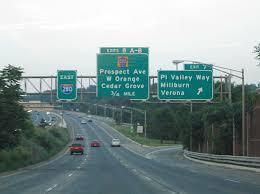
There may not have been as many mission statement songs on the charts as during the summer of 1967. One, Scott McKenzie’s San Francisco, was tied to a specific place and time. Others, while a bit more generic, caught the zeitgeist flush: Get Together, which floated around the bottom of the Billboard Hot 100, then reappeared as a top ten hit in 1969, and All You Need Is Love, the template for Imagine.Image result for pleasant valley way west orange I-280
A more subtle anthem from that summer was the Monkees’ Pleasant Valley Sunday, with a guitar sound borrowed from the Beatles’ Revolver album and lyrics that rejected consumerism and suburbia. Carole King and Gerry Goffin, who wrote the song, lived on Pleasant Valley Way in West Orange, NJ and whether the lyrics are a diary or a dramatization, the street truly featured “rows of houses that are all the same,” although it’s been awhile since I’ve driven through it..
Pleasant Valley Way exits off I-280, which connects I-80 to the north with the New Jersey Turnpike 18 miles away, and marks about the last spot where people worry about their lawns before the highway cuts through urban East Orange and Newark. In the early sixties, Janis Ian and her family were among the diminishing number of white people living in East Orange. Her Society’s Child, also from the summer of 1967, felt and sounded like a Shangri-Las song; teenage angst about parents who disapprove of boyfriends. For the Shangri-Las is was a wiseass who drove motorcycles. Janis, on the other hand, was facing down her parents and classmates for dating a black kid.
The song starts defiantly, but eventually the singer gives in to the taunts and smirks, and tells her boyfriend in the last line, “I won’t see you anymore baby” and then, hopefully, gets away from her parents and East Orange, maybe to keep an appointment with a man from the motor trade.
Society’s Child entered the Billboard top 20 on July 17, the same day the Newark Riots more or less ended and the National Guard tanks turned around and rumbled back to Fort Dix. It’s been said that one of many contributing factors to the riots was the construction of I-280, as rows of houses that were not the same, many of them historic Victorians, and commercial buildings were demolished. Newark, the most populous city in New Jersey, is only about 26 square miles, much of that airport, trucking depots and salt marshes. Building the highway, which spans ten lanes across at some points, squeezed its residents further until they were practically living on top of each other.
Living some 25 miles from the riots, my friends and I agreed to not ride our bikes anywhere near Passaic Street, which we saw as the dividing line that set the boundary for the “black section” of town. My father, a fireman, said orders from above were that if a house caught fire and black people began to throw bricks at the firemen, they were to let it burn.

The lyrics to Pleasant Valley Sunday were kind of cartoony, but I understood where the Monkees were coming from. To me, suburbia meant safety. It was home. With time, we began to ride our bikes past Passaic Street again, into the neighborhoods where the houses were a little more rundown, the lawns thinner. There were nasty dogs, who barked and jerked their chains when we rode past. In September, I’d begin middle school, sharing classes with more black kids than ever before. Nobody threw any bricks. And nobody dated anyone from the other side of Passaic Street.

Monday, June 19, 2017

RESCUE FROM GOTHAM CITY
By the first months of 1967, I was pretty much done with my obsession of 1966. With each passing episode of Batman, my enthusiasm dwindled as the dialogue grew campier, the plots dopier and the guest villains grew ever more fossilized. Even so, a few weeks before Christmas I’d seen the Justice League playset at a downtown discount store and it jumped to the top of my list. With its well-painted and sculpted figures of Batman, Robin, Superman, Wonder Woman, Flash and Aquaman it was an impressive set. On Christmas morning I lined them up in my room and … nothing happened. I felt silly about the fuss I’d made wanting it and with time everything wound up in a box in the attic.
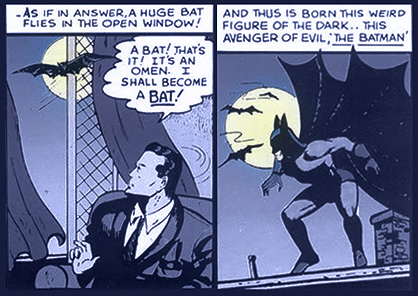
On a Saturday night that February, the host of the Hollywood Palace for that week – Van Johnson, one of those show business relics who would also play a villain on Batman, the totally forgettable Minstrel – introduced a pair of promo films by the Beatles. Penny Lane was crisp and upbeat. Strawberry Fields Forever spooky and syrupy. Watching those videos was, for me, akin to the moment when the bat flies through the open window in Bruce Wayne’s study.
batman_418x296.jpg
I bought the single (with the picture sleeve) and carried it around like a house key, bringing it to school in my binder. Then, eight months after getting the Justice League playset for Christmas, I turned 13 and got a transistor radio. More bats fluttering through an open window.   
The strongest signal sat in the middle of the dial, WABC. Thumbing all the way to the left brought in WMCA, with a larger playlist than ABC, but their DJs seemed like older guys to me. At the opposite end of the dial was the staticky R&B of WWRL. Flip over to FM and there was WBAI, which felt hip but kind of boring, and by the fall, WOR-FM, one of the first ‘progressive’ rock stations.

I watch Batman today and enjoy it, as long as the guest villain isn’t the Minstrel. And while the Batman metaphor works for me in a personal way, a second -- and more universal comic book comparison -- is that the Penny Lane/Strawberry Fields Forever single would be to Sgt. Pepper as Silver Surfer is to Galactus: a herald arriving in advance of cosmic upheaval. In the eighties, I sold the Justice League playset to a guy who owned a local comic book store for $250. It goes for thousands of dollars today in mint and for all I know, it’s changed hands a dozen times since. The timing around getting the toy was all wrong for me. I hope whoever has it today is getting something out of it.

Friday, June 9, 2017


PEPPERLAND
My copy of Sgt. Pepper’s Lonely Hearts Club Band, brought home 50 years this summer, still sits in my record collection, which today is a time machine frozen in the year 2000, which was probably the last time I bought vinyl.
I say “brought home” because I didn’t buy Pepper. Back then, if you had enough quarters and patience, you could win albums at the spinning-wheel games of chance at the Seaside Heights boardwalk. My father would whip a buck out of his wallet, lay it down on 5, and the kid working the booth would change it into quarters. One quarter would go to me, to place on my choice, a number or a symbol.
The old man had impossibly good luck on the boardwalk and we had the records, boxes of candy, cartons of cigarettes, AM/FM radios and stuffed animals to prove it. Of course, 5 came up and my mother mentioned a Tony Bennett album. I was only 12, but I kept my cool. I looked my parents in the eyes and said, evenly and unemotionally, “Sgt. Pepper. I gotta have Sgt. Pepper.”
The kid behind the booth, probably a college student making some summer money, handed it over and said to me, “Good choice.” My parents and sister in the lead, I kept a few steps behind as we made our way down the boardwalk. A gang of teens, probably locals, walked past. They were hanging with girls and not their parents. And one of them saw what I was carrying under my arm, nodded and said to me, “Great record.”
I was with my parents. No doubt dressed like a nerd and wearing glasses. I probably had sunburn. But I now belonged, the latest member of the community called Pepper Land.
I played that record incessantly and knew every moment of it the way I knew any other essential corner of my 12-year universe: the streets of my hometown, the faces of my plastic soldiers, Fantastic Four plotlines. In high school, when I had to write an essay dissecting a popular song, I went with She’s Leaving Home. An easy A. When I bought my first expensive stereo, with the giant EPI speakers that sat on the floor, Pepper was the first platter that went on. Guesses on what was the first CD I bought or the first time I smoked weed  and purposely set up a soundtrack that would fit my mood?
I waited too long to order my copy of the 50-year anniversary deluxe edition of Sgt. Pepper and wound up buying it from a dealer in London on eBay. With economy shipping. Each day I come home from work and look around. So far, mostly just catalogs and credit card solicitations.  
It would have been so much easier to get in my car and zip down the Garden State Parkway to Seaside Heights. Find the right booth, the one playing Lovely Rita at this very moment, the one near the guy who sells lemonade with the giant plastic lemons hanging in his stand. Lay down a buck on 5 and listen to the wheel tick as it spins. Then, as it slows down, your heart beats faster. Another winner.