Showing posts with label Baseball. Show all posts

Sunday, February 8, 2026

The home of the brave

The textbook year for divisiveness in America that’s always cited is 1968: Vietnam, race riots, the murders of Bobby Kennedy and Martin Luther King, and on and on. Today, it’s only February yet 2026 is shaping up as possibly one of the most brutal and contentious years in U.S. history.

The Super Bowl should be apolitical, but it seldom is and this year’s halftime entertainment has right-wingers jumping down a Bunny-hole. Ironically, in 1968 another Puerto Rican-born singer pissed off a different generation of conservatives during a sporting event.

Born blind, Jose Feliciano was 20 years old when his jazz/folk take on the Doors' Light My Fire went to #3 nationally, winning him Grammies for Best Contemporary Pop Vocal and Best New Artist. Choosing Feliciano to sing the national anthem before the fifth game of the 1968 World Series between the Detroit Tigers and St. Louis Cardinals seemed like a safe bet.

Sitting on a stool in the infield with his guide dog lying next to him, Feliciano shed the bombast usually associated with the anthem, slowed it down and reshaped it much as he did with Light My Fire.

Conservatism in 1968 meant membership in the “silent majority,” a hawkish view of U.S. involvement in Vietnam and, according to public opinion polls “found the antiwar movement, particularly its radical and ‘hippie’ elements, more obnoxious than the war itself.” If you were male, you likely served in the military at some point. 

Short-sighted viewers were presented with a singer with longish hair, who doesn’t even have the decency to remove his sunglasses and with a foreign name yet, fooling around with the national anthem. People freaked out and provided feedback the old-fashioned, pre-social media way: angry calls to the NBC switchboard and letters to the editor for weeks afterwards. One example: “I have never heard anything so disgraceful or disrespectful.”

“When I did the anthem, I did it with the understanding in my heart and mind that I did it because I’m a patriot,” Feliciano said in 2018. “I was trying to be a grateful patriot. I was expressing my feelings for America when I did the anthem my way instead of just singing it with an orchestra.”

Earlier in the World Series, the anthem was sung, predictably and colorlessly, by 1950s pop singer Margaret Whiting and Marvin Gaye, whose version is straightforward (at a time when Berry Gordy was looking to move his Motown acts deeper into the world of white entertainment and before Marvin’s soul got psychedelicized). “I was very disappointed that Gaye didn’t do his own thing,” said Feliciano later. “Gaye chose to follow the old, safe path. He had a wonderful opportunity to say something for his people.”

Gaye made up for it before the 1983 NBA All-Star Game with a version that, just as Feliciano reshaped the anthem in the same manner that he reinterpreted Light My Fire, turned The Star-Spangled Banner into a coda for his 1983 hit Sexual Healing.

Released as a single, Feliciano’s version of the anthem went to #50. He's also performed it at naturalization ceremonies welcoming new immigrants to America.

Friday, October 17, 2025

Another tale of two cities

I needed to get this out before circumstances change.

Three of the four teams left in the baseball postseason are expansion teams: Milwaukee Brewers, Seattle Mariners and Toronto Blue Jays and there’s still an outside chance that two will meet in the series.

In baseball, that’s not uncommon. In 2023, the Arizona Diamondbacks played the Texas Rangers, the Rangers having started as the expansion Washington Senators in 1961. In football you need to go back to 1972 when Dallas played Miami, as the only time expansion teams met in the Super Bowl.

(Who knows about the NBA and the NHL. Basketball and hockey have added so many teams over the decades, and franchises have moved so many times I don’t have the knowledge or the patience to track their lineages).

There’s a longtime connection between Milwaukee and Seattle. The Brewers began as the Seattle Pilots, an expansion franchise always short of cash playing in a beat-up minor league stadium. Following just one season in Seattle and a winter and spring of bankruptcy claims and court decisions, the team was acquired by Bud Selig, who made his fortune with a car-leasing business, and moved to Milwaukee a week before the 1970 season began.

Moving the team from the Northwest to the Midwest was rare balm for a city that had already been left at the altar when their Milwaukee Braves carpetbagged their way to Atlanta in 1966, amidst whispers that some of its blue-collar, unionized assembly line jobs might also shift to the non-union South.  

In 1970, Milwaukee was still an economic force in the Midwest, and it wasn’t just beer that made Milwaukee famous. Along with Pabst, Miller and Schlitz, there was meatpacking – and as an offshoot – leather tanneries, Harley Davidson and Allis Chalmers which built tractors and agricultural equipment. Most would see their profiles reduced or be gone within the next decade or so.

Meanwhile Seattle, a boomtown in the 1960s, was trying to keep from falling into an abyss. The region's fortunes and employment were mostly dependent upon one company, Boeing. In 1970, the company began a 17-month period without a single new order from any U.S. airline. Suddenly building a new ballpark didn't seem like a priority anymore.

With the Pilots' move to Milwaukee approved less than a week before the start of the season, the Brewers had no time to design new uniforms and were left to rip “PILOTS” off the front of their existing uniforms and sew on "BREWERS". Hard pressed for time, the team blew the dust off this ancient minor-league Milwaukee Brewer “beer-barrel man” image:


In 1970, Seattle and the State of Washington sued the American League for breach of contract. The lawsuit continued until baseball offered to give Seattle an expansion franchise in return for dropping the suit. The Mariners began play in 1977 owned by a consortium led by entertainer Danny Kaye, who was enough of a fan that his gravesite includes a bench with images of a baseball and bat.

The Mariners have been a study in frustration ever since, not fielding a winning team until 1991, holding the longest postseason drought in any of the four major league sports (2001 to 2022) and, as of today, the only active franchise to never appear in a World Series.


It may also be worth mentioning that this year saw the final act in the Mariners-Pilots connection. In 1977, rubber-armed pitcher Diego SeguĂ­, 40 and in his last of 15 major league seasons, became the only player to play for both the Pilots and the Mariners, finishing with an 0-7 record. Segui died this past June at age 87.


Sunday, June 29, 2025

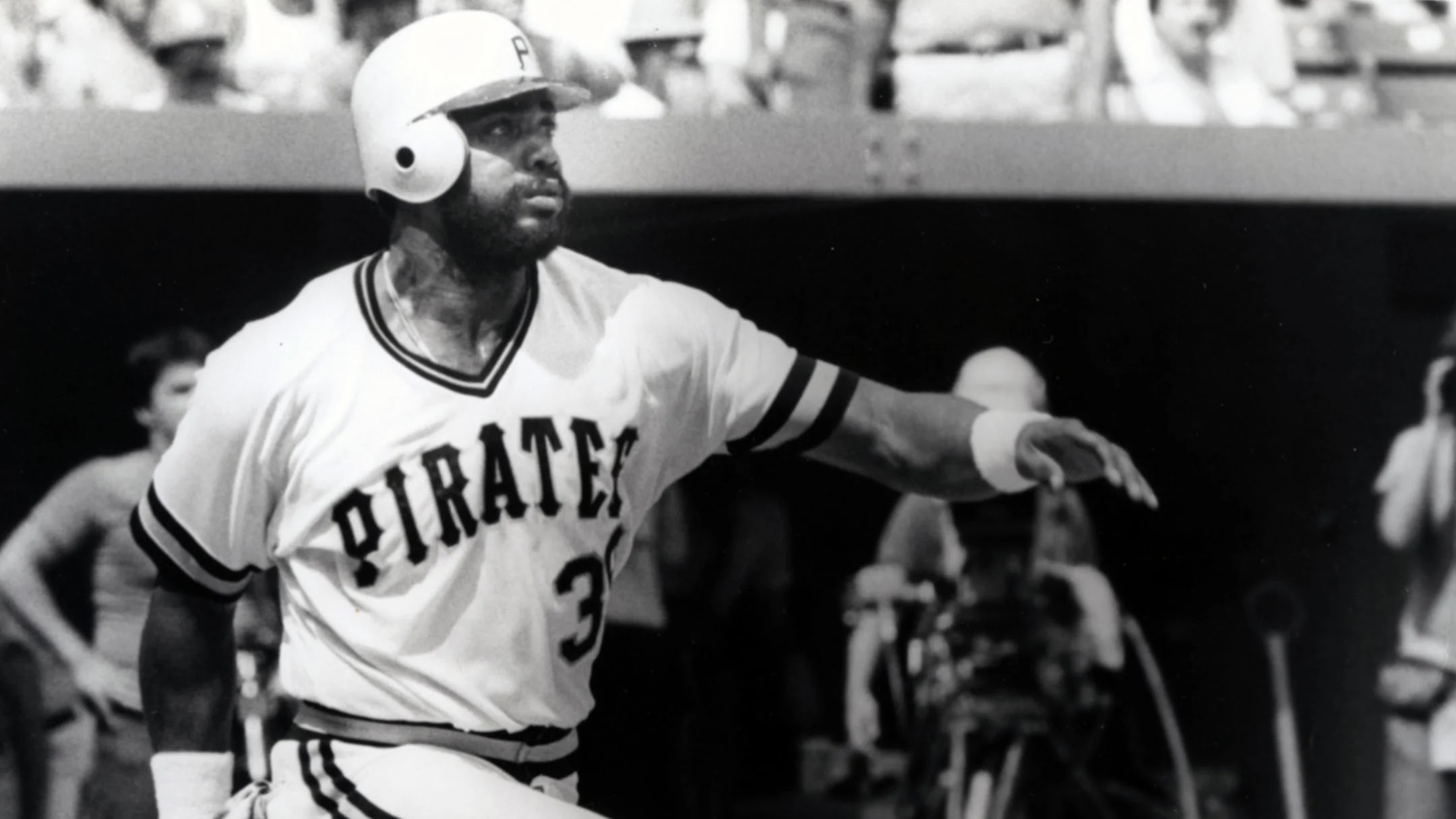
Calling on the Cobra

In 1980, Dave Parker hired a public relations agency to test the waters of celebrity and make him more of a household name. The agency reached out to The Aquarian Weekly, a metropolitan area entertainment weekly that I was freelancing for and I was assigned to write a profile of Parker.

I called him at his home in Bradenton, Florida where the Pittsburgh Pirates trained each spring, and the interview went well. I pictured him in an oceanfront condo, tastefully furnished, while I sat on the floor of my bedroom. Reading it over today, it was a pretty safe article, mostly vanilla answers to mostly vanilla questions.

(Aside from the fact that I was speaking with Parker, who at the time looked like he might someday rank among the game’s all-time greats, I remember that I’d bought a Radio Shack device to tape our phone conversation, a wire with a suction cup at one end for the phone receiver and a jack at the other end to be plugged into a tape recorder. Imagine the terror when I played back the interview and our voices sounded as distant and tinny as if they’d been recorded from Pluto. Thankfully, I took notes).

Parker was one of the coolest major leaguers of the era. He wore an earring and warmed up in the on-deck circle swinging a sledgehammer. He had swagger and presence. And as a black player making significant money, he drew frequent insults and threats from some fans.

A Pirates radio announcer nicknamed Parker the Cobra, thinking a quick-strike predator. (Which is what you want, having someone invent a nickname for you. Unlike Kobe Bryant, who famously gave himself the nickname Black Mamba).

Some of Parker’s quotes from our interview that were a little more vanilla fudge than vanilla:

“I have no trouble whatsoever in getting up for every ballgame. I could play baseball in the middle of December in the snow.”

“I’ve been doing some p.r. for myself. I’ve always thought of myself as being just a ballplayer, not really needing the hype. I haven’t been much of a public figure, but I think it’s time people got to know Dave Parker.”

Dave, be careful what you wish for. Unfortunately, part of Parker’s legacy lies with his role in the Pittsburgh drug trials following the 1985 season. He was among several players who testified against a drug dealer and was suspended for the following season before their sentences were lifted in exchange for community service, drug testing and fines. Age, weight problems and injuries began to catch up with Parker and he called it quits in 1991, a 19-year career.

Parker died yesterday; he’d been suffering with Parkinson’s disease for several years. Timing, which he had as a batter, sometimes doesn’t translate into real life. Parker died 29 days before he was to be inducted in the Hall of Fame.